
Multi-collateral borrowing is now live for everyone in RUJI Money Market.
From now on, you can use BTC, ETH, BCH, DOGE, LTC, USDC, USDT, and XRP together as collateral for a single loan position, with support for more assets planned over time.
Instead of managing a separate loan for every collateral asset, you can bring supported balances together in one credit account and adjust the position as your needs change.
Continue reading to learn how to create, set up, and manage a multi-collateral loan position on Rujira.

One Credit Account, Multiple Collateral Assets
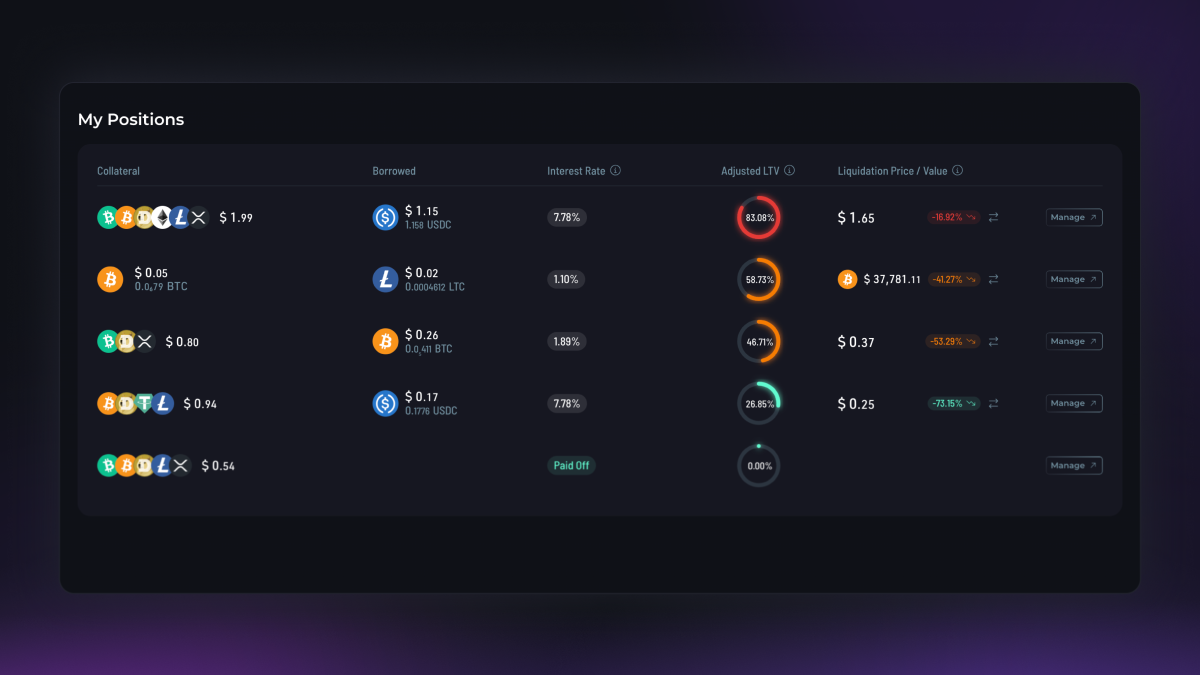
When you borrow through RUJI Money Market, your collateral and debt are held in a credit account. Each account is tied to one borrowed asset, such as USDC, while the collateral side can contain several supported assets.
Every collateral asset has its own collateral ratio, which determines how much of its market value supports the loan. RUJI Money Market combines those adjusted values and manages the account as one position. This is known as cross-margining.
With several assets working together, you can use more of the balances you already hold without selling the assets. You can add collateral without increasing your debt, add collateral and borrow more, or adjust your borrow position without opening another loan.
Add Collateral or Increase Loan
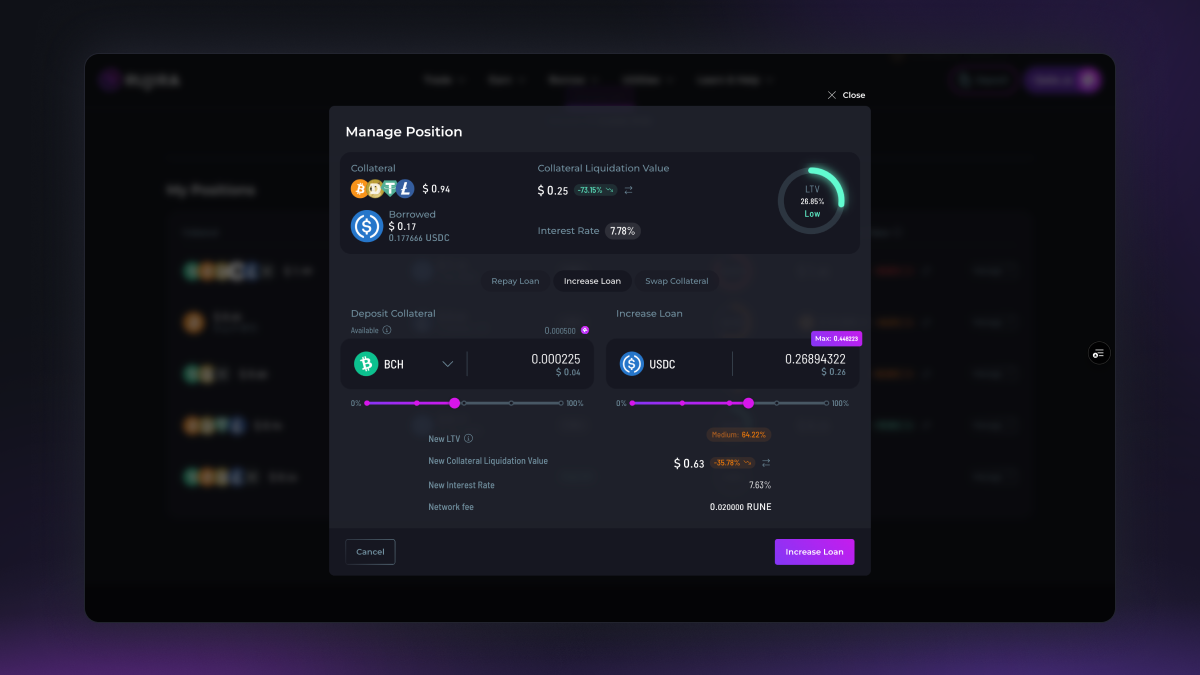
To add another supported asset, open Manage Position from an existing position on the Borrow page and select Increase Loan.
On the left, choose a collateral asset, enter the amount, and on the right leave the additional borrowing amount at zero. The new collateral will support the existing loan without increasing your debt.
You can also deposit collateral and increase the loan in the same transaction. Before you confirm, the interface shows the resulting Adjusted LTV. Hover over the New Collateral Liquidation Value to see how the change affects the account.
Repay or Withdraw Collateral
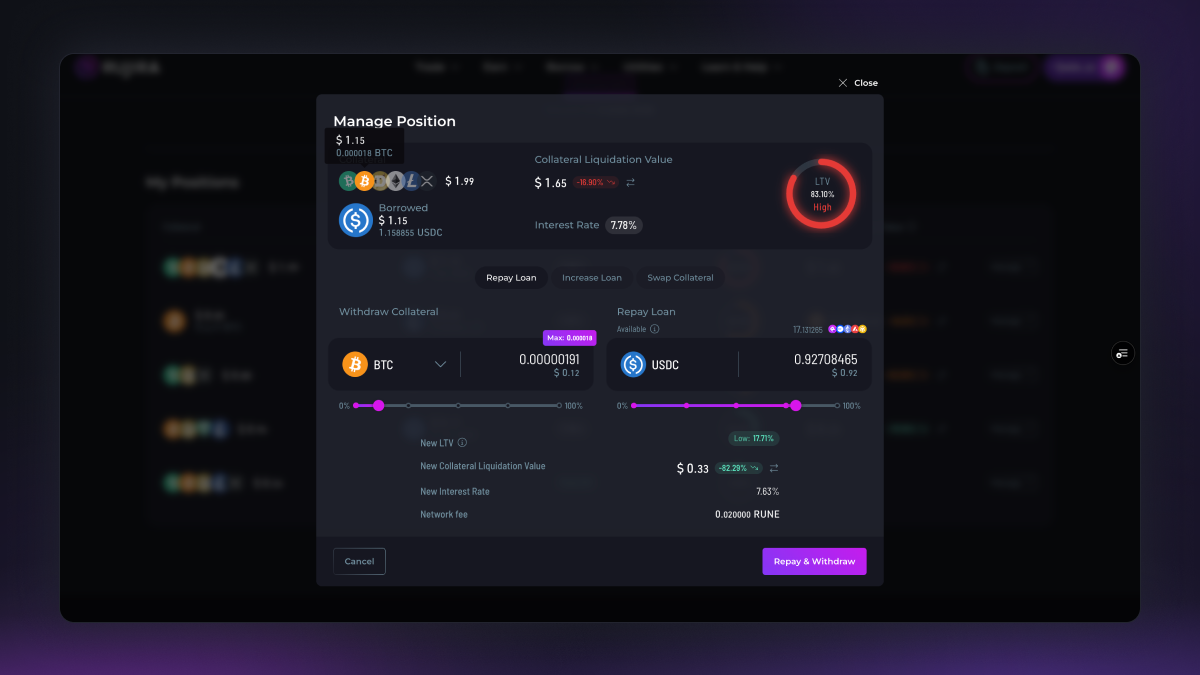
The Repay Loan tab lets you repay part or all of the outstanding debt. Reducing the debt lowers the account's Adjusted LTV and gives the position more room.
You can also withdraw collateral as long as the position's new Adjusted LTV remains below 90%. This lets you remove one collateral asset, reduce the balance of an asset, or change how much total collateral remains in the account.
A fully repaid credit account can be used to borrow again. Hover over the collateral icons at the top of the modal to review the amount and value of each asset before choosing what to withdraw.
Swap Collateral
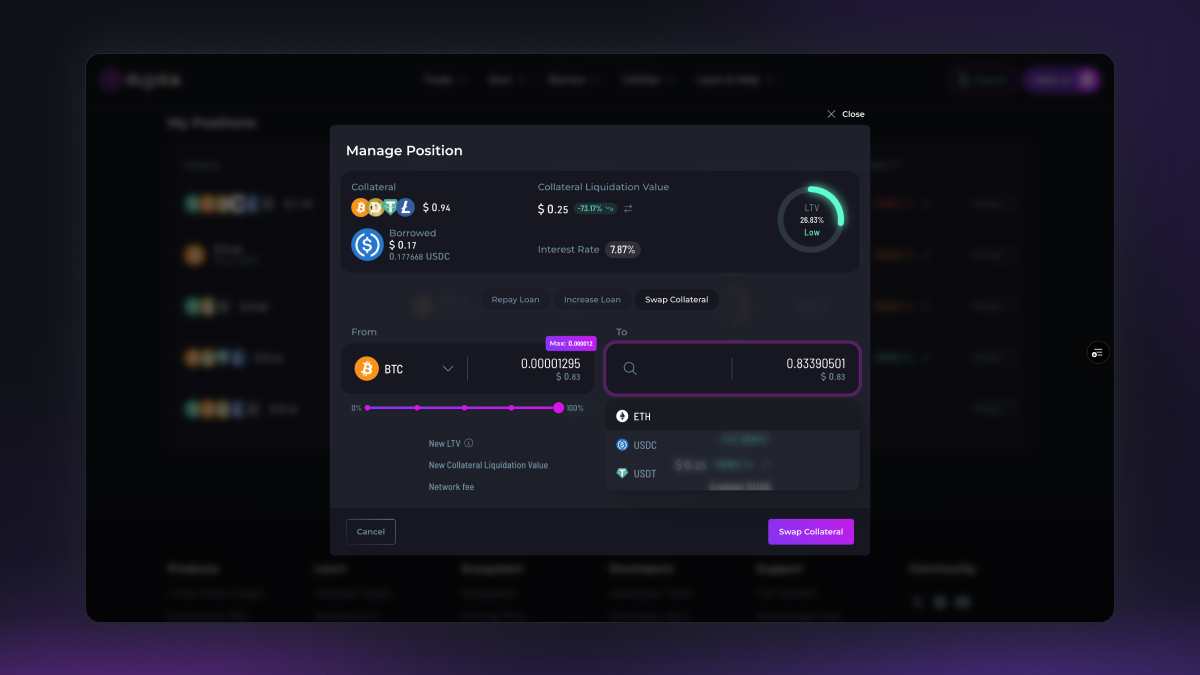
The Swap Collateral tab lets you exchange one collateral asset for another while keeping the credit account and loan open.
This makes it possible to change the collateral mix without first repaying the loan and opening a new position. The swap happens inside the existing credit account.
Collateral assets can have different market values and collateral ratios, so a swap can change the account's Adjusted LTV. The interface previews the updated position before you confirm the transaction.
Keep an Eye on Adjusted LTV and Liquidations
Adjusted LTV compares the account's debt with the combined risk-adjusted value of all its collateral. Adding collateral or repaying debt lowers it, while borrowing more or withdrawing collateral raises it. A lower Adjusted LTV gives the position more room before liquidation.
The position overview shows the total collateral value, debt, interest rate, and current Adjusted LTV. The interest rate comes from the market for the asset you borrowed.
If the account reaches an unsafe level, a liquidator can sell enough collateral to repay part of the debt and return the account to a safe level. For now, the collateral that is liquidated first depends on the liquidation route submitted by the liquidator.
In the future, you will be able to set a preferred liquidation order for the collateral assets in your credit account.
Learn More About RUJI Money Market
RUJI Money Market brings lenders, borrowers, and liquidators together in one open and transparent market. Lenders supply assets to earn interest, while borrowers access liquidity without selling their collateral.
Liquidations are an essential part of keeping the market healthy. When a loan position becomes unsafe, liquidators can repay debt by purchasing collateral, helping protect lenders and maintain the solvency of the market.
Learn more about RUJI Money Market

Get Started on Rujira
For the full Rujira experience, you need a supported wallet. Our Get Started guide explains how to set up and connect a wallet such as Keplr or Vultisig. Your wallet lets you manage your assets and interact directly with Rujira while remaining in control of your funds.
Set up your wallet and get started
Once your wallet is connected, deposit the supported assets you want to use on Rujira. You can also deposit from a second wallet, such as Rabby, MetaMask, Trust Wallet, and others. After the deposit is complete, you can open RUJI Money Market, go to Borrow, and use those assets as collateral to create and manage a credit account.
Deposit assets through the Rujira Portfolio

More Flexible Borrowing for Native Assets
Multi-collateral support for credit accounts gives everyone more ways to structure and manage onchain credit without selling their assets.
From one credit account, you can add or withdraw multiple collateral assets, increase or repay the loan, swap collateral assets, and monitor the combined health of the position.
Multi-collateral borrowing is live and available to everyone.
Fair by design. Owned by you.