
True digital ownership
Rujira is built for self-custody. You can access DeFi with native assets without handing custody to a centralized platform.
Built for Freedom
Rujira brings self-custody, open access, and transparent markets to native assets across connected chains. Trade, lend, borrow, and earn without needing to trust any centralized intermediary, or giving up control.

Cypherpunk origins
"The root problem with conventional currency is all the trust that's required to make it work."
Bitcoin proved that money can work without asking a central party for permission. Rujira carries that idea into omnichain DeFi by giving you access to trading, liquidity, lending, borrowing, and yield opportunities with native assets while you stay in control of your wallet.
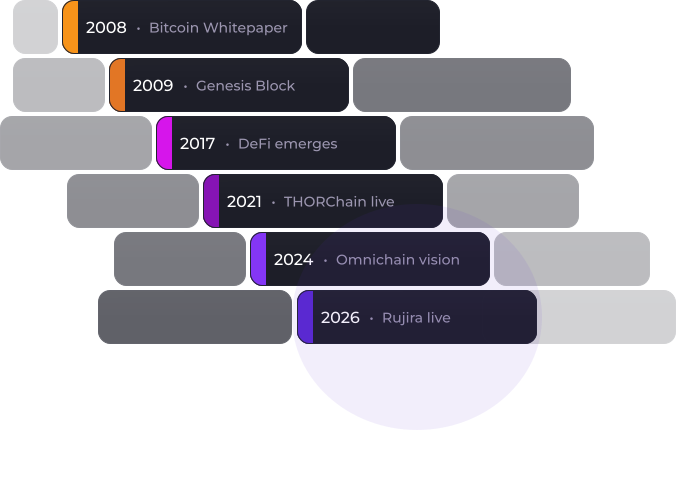
Open finance timeline
Crypto began with self-custody, transparency, and permissionless access. Over time, third-party bridges, wrapped assets, centralized platforms, and fragmented apps made the experience more fragile and harder to trust. Rujira brings the focus back to simple, useful, self-custody finance with native assets.
Cypherpunk principles
Cypherpunk finance is not nostalgia. It is a practical design path for decentralized finance: self-custody, open access, transparent rules, native assets, useful privacy, and community-owned value.
Rujira is built for self-custody. You can access DeFi with native assets without handing custody to a centralized platform.
Open finance should not depend on where you live, who you know, or the arbitrary rules of centralized gatekeepers. Rujira gives you direct access to trading, liquidity, lending, borrowing, and more.
Markets should be visible, verifiable, and understandable. Rujira uses onchain systems so you can inspect liquidity, market activity, and protocol revenue.
Rujira focuses on DeFi with native assets across connected chains. You can use assets like BTC, ETH, LTC, DOGE, and BCH without relying on wrapped assets or third-party bridges as the default path.
Privacy should give you more control without making systems impossible to audit. Rujira's privacy direction focuses on selective disclosure, financial control, and verifiable infrastructure.
Rujira is built around community-owned infrastructure and shared financial access. Users and builders can participate in open markets without depending on centralized gatekeepers.
Native asset ecosystem
Rujira connects communities that value self-custody, open access, and useful money. Each chain keeps its own culture, while Rujira creates shared DeFi paths for native assets, cross-chain liquidity, and self-custody markets.
Native BTC utility for trading, liquidity, lending, and Bitcoin DeFi without giving up self-custody.
Extend BCH beyond payments into self-custodied trading, liquidity, collateral, and DeFi access.
Bring LTC into broader self-custody utility while keeping the simplicity that makes Litecoin familiar to users.
Bring XMR's privacy-first values into broader self-custodied market utility.
Connect ZEC's optional-privacy mindset to useful native-asset DeFi paths.
Bring Dash's payment-first speed into broader self-custodied market utility.
Privacy Layer
Rujira is working with Redacted to bring a compliant privacy layer to DeFi. The goal is to give you more control over what you reveal while keeping markets, balances, and protocol activity transparent where verification matters. This creates the best of both worlds: privacy for users, compliance for broader adoption, and transparent systems that communities can still trust.
Redacted is building privacy tools that protect sensitive wallet and activity data while keeping Rujira aligned with compliance needs.
Use native BTC, ETH, XRP, and more across Rujira DeFi products, with greater control over what you reveal.
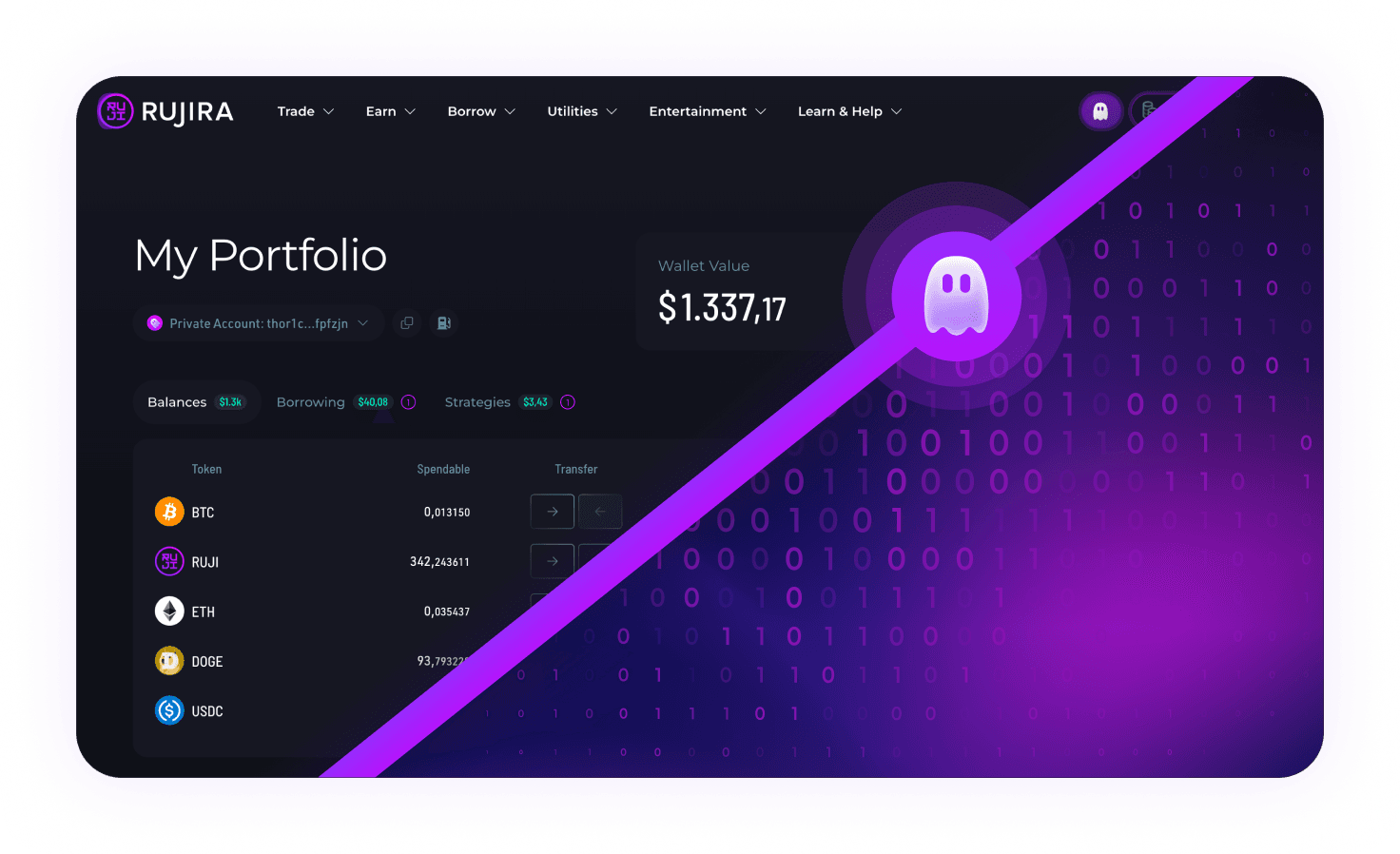
The privacy layer is designed to support Rujira's full product suite, from trading and lending to borrowing, liquidity, and more.
 FAQ
Clear answers about cypherpunk values, Bitcoin, self-custody, privacy, native assets, and how Rujira brings these ideas into finance.
Cypherpunk is a movement built around a simple idea: people should be able to protect their freedom, privacy, and ownership with technology.
The movement started before Bitcoin, when developers, cryptographers, and privacy advocates began using cryptography to build open tools that did not depend on governments, banks, or large companies for permission.
Cypherpunk values include privacy, self-custody, open-source software, decentralization, and censorship resistance. These ideas helped shape Bitcoin and still matter today because more of our lives, money, and identity now exist online.
Bitcoin turned many cypherpunk ideas into a working financial system.
In 2008, Satoshi Nakamoto introduced Bitcoin as peer-to-peer electronic cash. It allowed people to hold and transfer value without relying on a bank, payment company, or central authority.
Bitcoin showed that money could be transparent, decentralized, and permissionless. You could own your assets directly, verify the rules yourself, and transact without asking for access. That is why Bitcoin is often seen as the first major cypherpunk breakthrough.
Cypherpunk finance means building financial tools around self-custody, open access, transparency, and user ownership.
In practice, this means people should be able to trade, lend, borrow, save, and earn without depending on centralized gatekeepers. The rules should be visible. Access should be open. Ownership should stay with the person using the system. The person using the system should be able to own a share of the platform.
It is not about making finance more complex. It is about making finance more fair, transparent, and controlled by the people who use it.
Rujira brings cypherpunk values to finance by building around self-custody, native assets, transparent systems, open-source infrastructure, and community ownership.
You stay in control of your assets. You can access financial tools directly through your own wallet. Markets and protocol activity are visible onchain. The system is designed so access does not depend on where you live, who you know, or whether a centralized platform chooses to serve you.
Rujira’s goal is to build a fair and open financial system where everyone can access the same opportunities.
Native assets are the original assets of their own blockchains, such as BTC on Bitcoin, LTC on Litecoin, BCH on Bitcoin Cash, and DOGE on Dogecoin.
Many DeFi platforms rely on wrapped assets or third-party bridges. That can make the experience harder to understand and add extra trust assumptions.
Rujira focuses on native assets because they are closer to the assets people already know and trust. This makes self-custody finance simpler, clearer, and more aligned with cypherpunk values.
Rujira is built around native assets and direct blockchain connectivity through THORChain.
Instead of relying on traditional third-party bridges as the main path, Rujira uses THORChain’s decentralized infrastructure to connect supported blockchains and their native assets.
This matters because cypherpunk finance should reduce unnecessary trust, not add more of it. The goal is to give you access to trading, liquidity, lending, borrowing, and other financial tools while keeping the system transparent and easier to verify.
A centralized exchange holds your assets for you. You deposit funds into an account controlled by the exchange and trust that company to secure your balance, process withdrawals, and keep access open.
Rujira is built for self-custody. You connect your wallet, stay in control of your assets, and interact directly with the network.
That difference matters. Cypherpunk finance is not just about price charts or trading tools. It is about ownership, access, and control.
No. Privacy is important, but cypherpunk finance is bigger than privacy alone.
It also includes self-custody, decentralization, open-source software, transparent rules, censorship resistance, and equal access.
A strong financial system should let people protect sensitive information where needed while still making markets, balances, and protocol rules verifiable where they matter. Rujira is built around that balance: private where it matters, verifiable where it counts.
Self-custody means you control your assets instead of handing them to a centralized platform. Open-source software means the code can be inspected, reviewed, and improved by the community.
Together, they replace blind trust with verification.
This is one of the core ideas behind Bitcoin, and it is also central to Rujira. A fair financial system should not ask you to trust hidden rules. It should let you verify how the system works and keep control of your own assets.
Yes, but only if it is built around the right principles.
Crypto moved away from its original values in many places. Centralized platforms took custody of user assets. Wrapped assets and third-party bridges added extra complexity and trust assumptions. Many systems became hard to verify or controlled by insiders.
Rujira is built to bring finance back to the principles that made Bitcoin powerful: self-custody, transparency, decentralization, open access, and fair opportunity.
The goal is not to recreate traditional finance onchain. The goal is to build a better financial system that is fair by design and owned by the people who use it.
Discover More
Cypherpunk values show up across Rujira's architecture, assets, onboarding, and support resources. Pick a page below to keep going.

