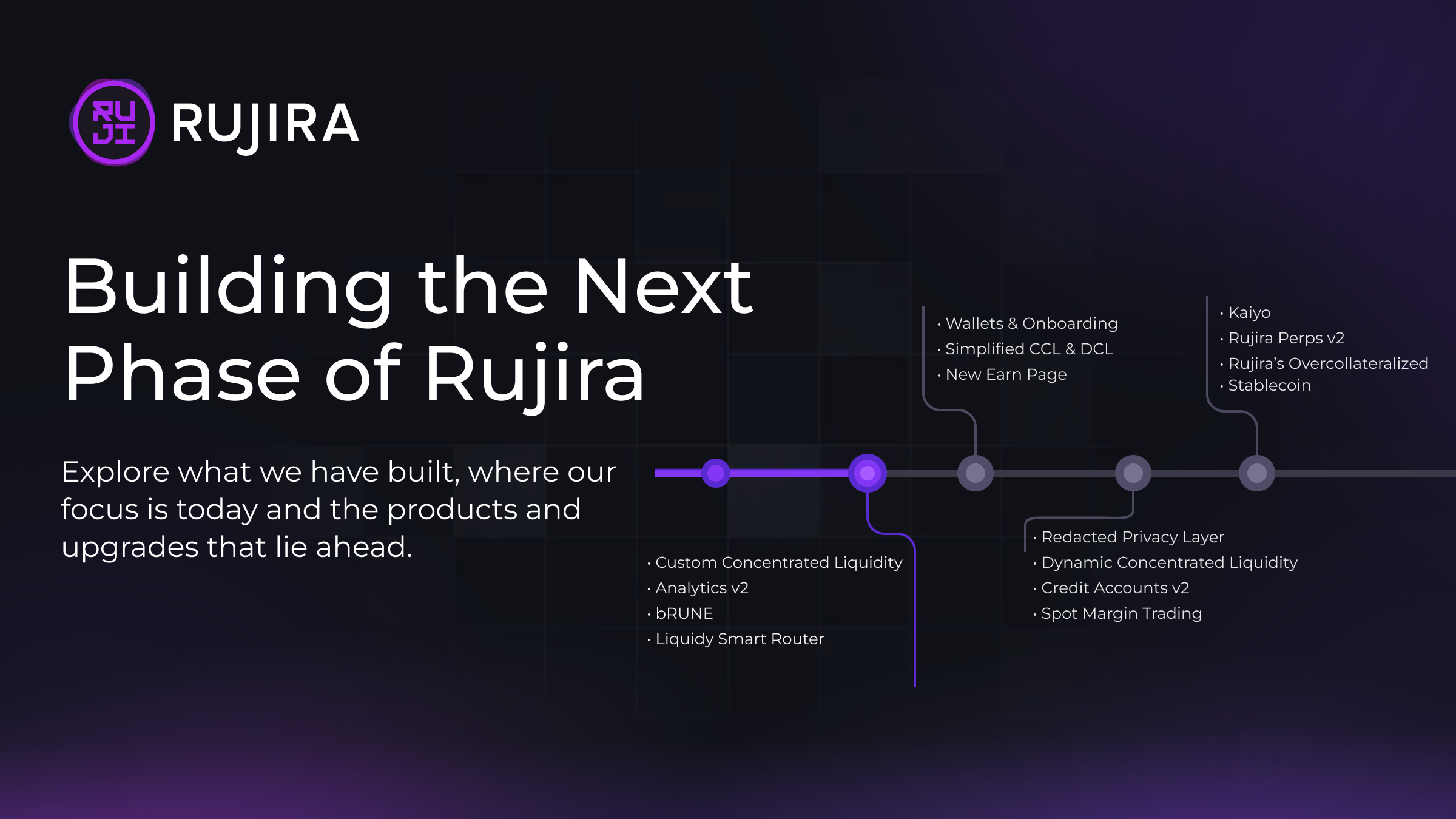
What Is Rujira Trade
Rujira Trade is a fully onchain decentralized orderbook exchange built on THORChain infrastructure. It gives traders the control and precision normally associated with a centralized exchange while allowing them to keep using decentralized, transparent, and permissionless infrastructure.
Through Rujira, people can trade native and secured crypto assets from connected networks, including Bitcoin, Ethereum, XRP, BNB Chain, Avalanche, TRON, Cosmos Hub, Bitcoin Cash, Litecoin, and Dogecoin. Instead of relying on an opaque matching engine or handing assets to a centralized custodian, orders are placed, matched, and settled onchain.
Rujira Trade also brings several sources of liquidity together. Traders can interact with orders from other users, Automated Trading strategies on the Rujira App Layer, and liquidity from THORChain Base Layer pools through the Virtualization Strategy. The result is an orderbook designed for open access, fair execution, and native asset markets.
Importance of a Decentralized Orderbook
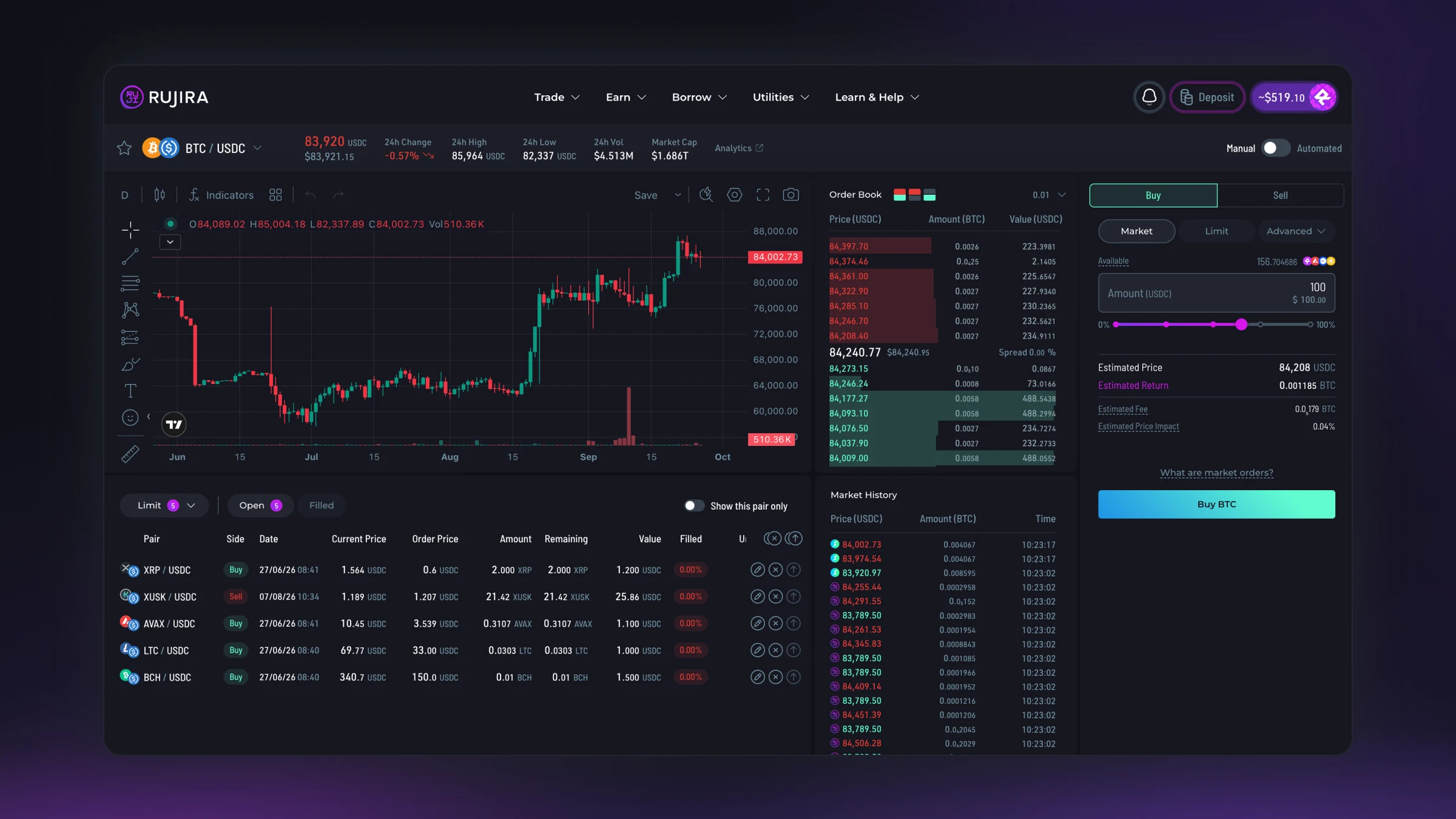
Orderbooks give traders more control over how and when they trade. Buyers and sellers can express the price and quantity they want, while the orderbook shows the liquidity available at different price levels. This is different from a basic swap interface, where the user normally accepts a quote generated from an automated liquidity curve.
Centralized exchanges have made orderbook trading familiar, but they require users to deposit funds with a single intermediary and trust its internal systems. Other decentralized exchanges remove the custodian but rely mainly on automated market maker pools. Rujira Trade combines the precision of an orderbook with decentralized settlement and user-controlled assets.
Native assets enter Rujira and remain redeemable for their corresponding Layer 1 assets. This makes it possible to use assets such as native BTC across smart contracts and financial products without depending on a centrally issued wrapped version.
Fair Execution Through Pro Rata Filling
Fairness is built into the way Rujira Trade matches orders. On many exchanges, orders at the same price are prioritized by arrival time. That can reward the participant with the fastest infrastructure, the closest server, or privileged access to an offchain matching system.
Rujira Trade uses proportional, or pro rata, filling at each price level. When several orders are available at the same price, an incoming trade is distributed between them according to their relative size. A participant does not receive the full fill simply because their order arrived a fraction of a second earlier.
The matching logic runs onchain, where the rules are transparent and can be applied consistently to everyone. Your participation at a price level is determined by your price and order size, rather than by who operates the fastest server. This supports Rujira's wider goal of creating financial markets that are fair by design and open to everyone.
Liquidity Across Rujira and THORChain
Rujira Trade is more than an isolated orderbook. Its modular architecture can combine liquidity from multiple sources in the same market.
Trader orders add directly visible bids and asks to the orderbook.
Automated Trading strategies place and manage liquidity on the Rujira App Layer.
The Virtualization Strategy can quote liquidity from THORChain Base Layer pools into Rujira Trade markets.
This architecture allows Rujira to separate the orderbook from the strategies that provide liquidity to it. New strategies can be introduced without replacing the trading venue itself. For traders, the important result is the potential for deeper markets, more competitive quotes, and better use of liquidity across both layers.
Supported Assets and Markets
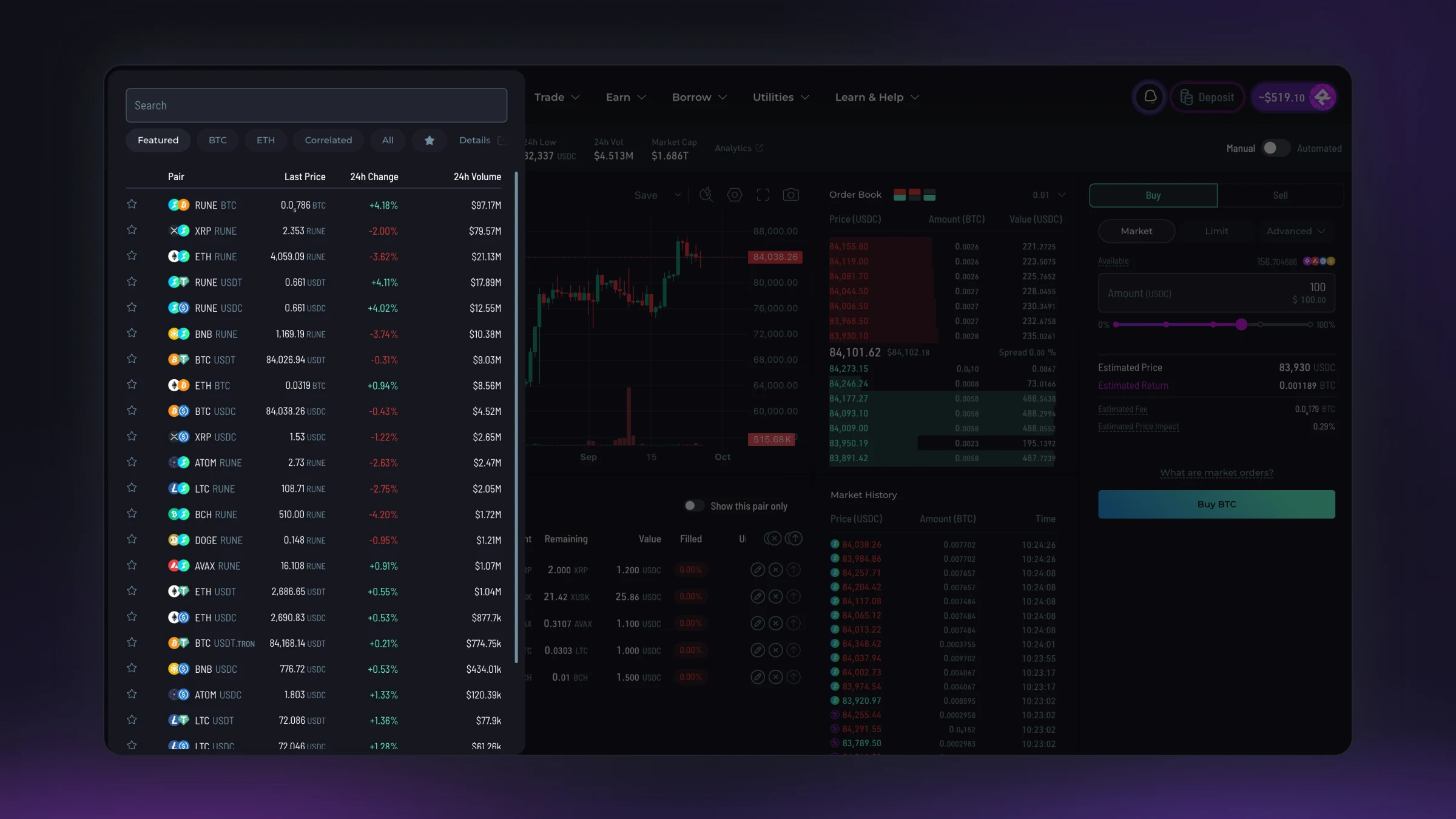
Rujira Trade supports markets across native assets, stablecoins, Rujira ecosystem assets, and secured versions of tokens from connected networks. Live markets currently include assets such as BTC, ETH, RUNE, XRP, BCH, LTC, DOGE, BNB, AVAX, ATOM, TRX, RUJI, TCY, bRUNE, USDC, and USDT, alongside additional stablecoins and ecosystem tokens.
Some assets are available in multiple network versions. For example, stablecoin markets can connect versions of USDC or USDT originating from Ethereum, TRON, Avalanche, Base, or BNB Chain. These markets create more direct routes between assets and can make liquidity easier to use across the wider Rujira and THORChain ecosystem.
The list can continue to develop as THORChain connects additional networks, new Base Layer pools become available, and Rujira supports more assets and trading pairs. The live Rujira Trade interface provides the current market list.
Choose the Order That Fits Your Strategy
Different trading goals require different tools. Rujira Trade supports simple orders for immediate execution, precise orders for a chosen price, and advanced orders for distributing or automating trades over time.
Market Orders
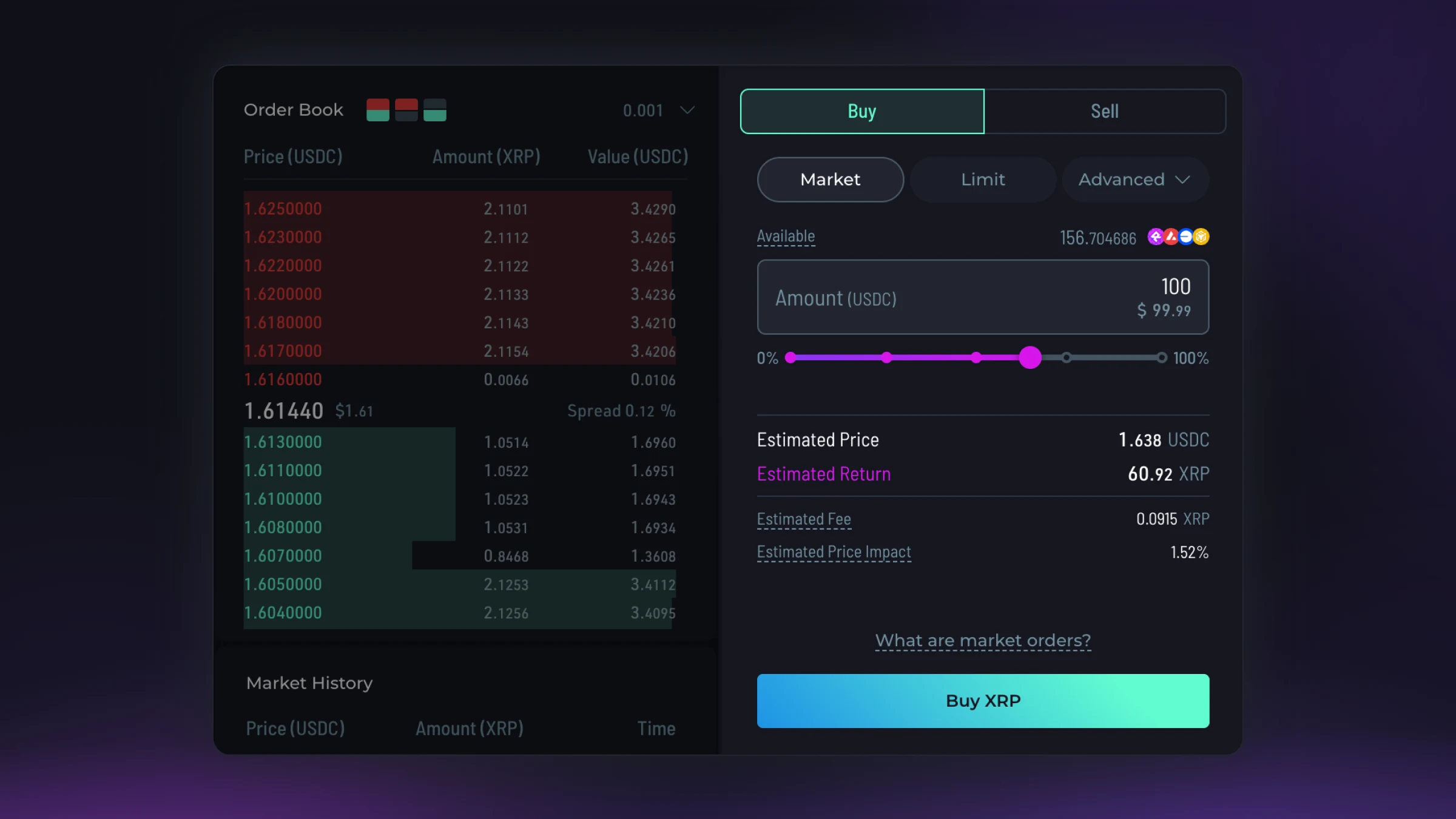
A market order buys or sells immediately against the best available liquidity in the orderbook. It is useful when completing the trade is more important than waiting for a specific price.
The final average price depends on the depth available across the orderbook. Before confirming, traders can review the quote and expected execution in the interface.
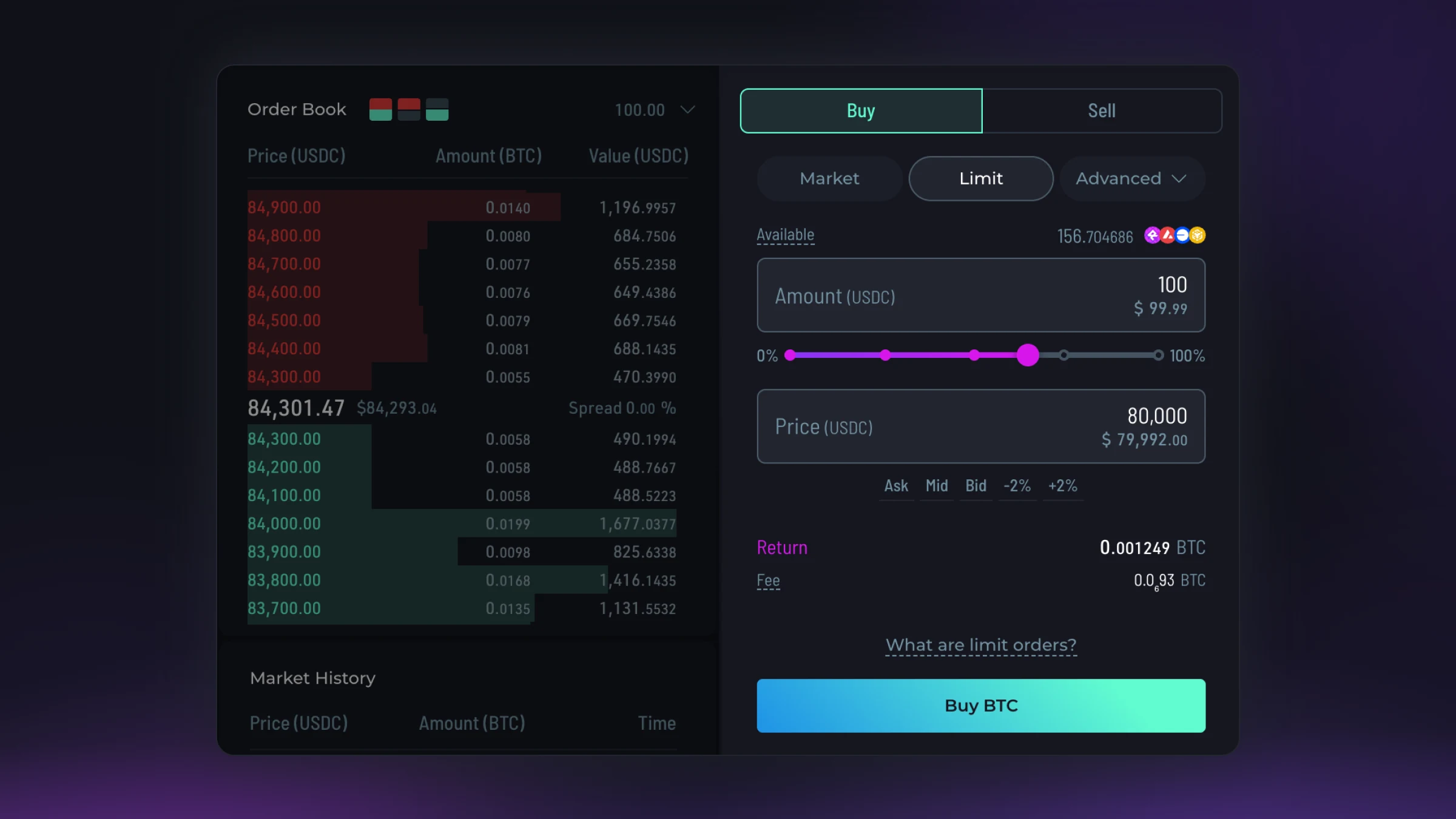
Limit Orders
A limit order lets you choose the maximum price you are prepared to pay or the minimum price you are willing to accept. The order can remain open until matching liquidity becomes available at that price.
If a limit order crosses the current market, it can execute immediately at the best available prices up to the selected limit. Any unfilled quantity can remain in the book as a standing order. This gives traders price protection without giving up better available execution.
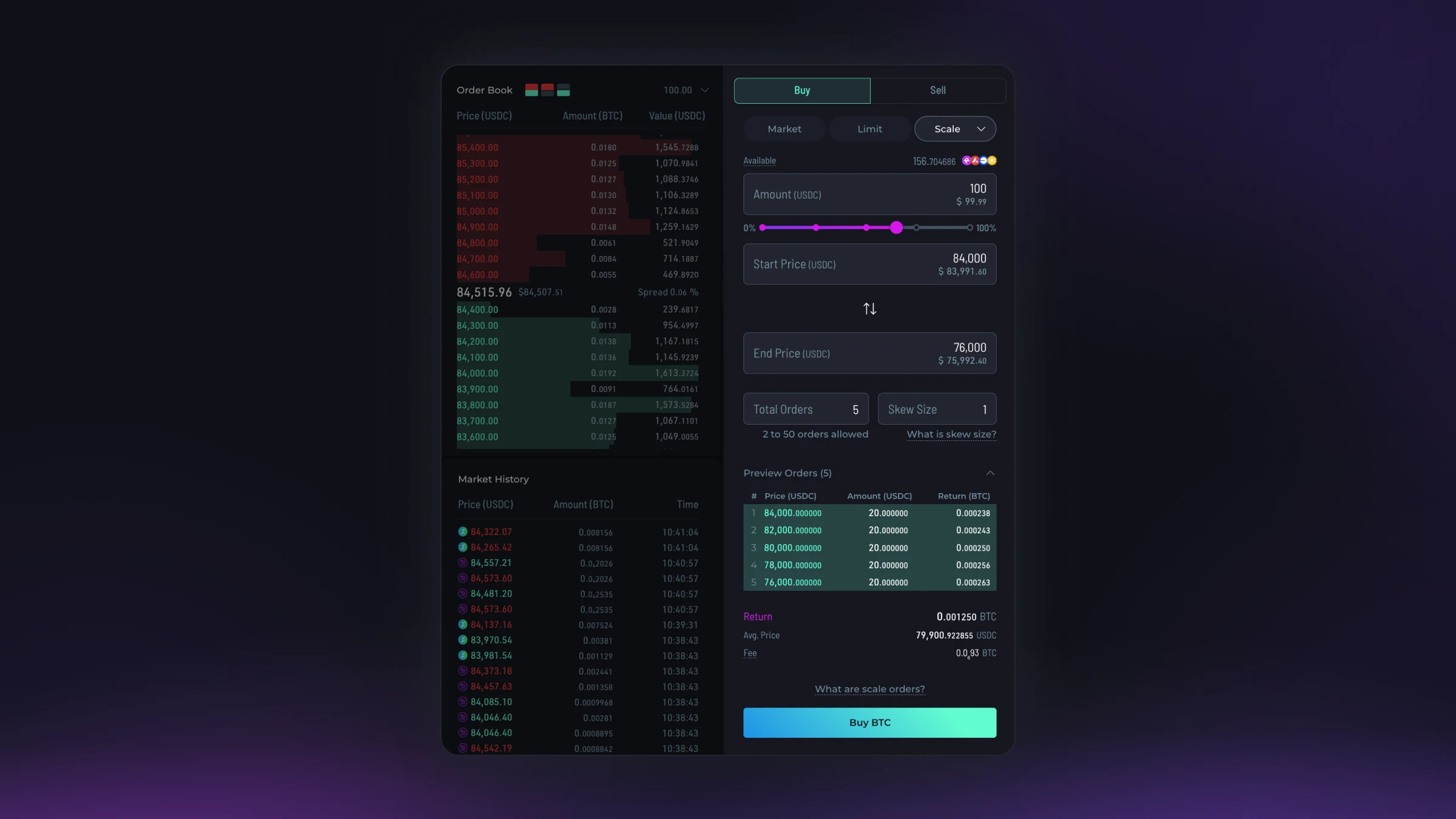
Scale Orders
A scale order distributes a trade across a series of limit orders within a chosen price range. Instead of creating every order separately, traders can define the range and let the interface build the order ladder.
Scale Orders can help someone build a position gradually, take profit across several prices, or place liquidity at multiple levels of the orderbook. The strategy remains visible and manageable as a set of onchain orders.
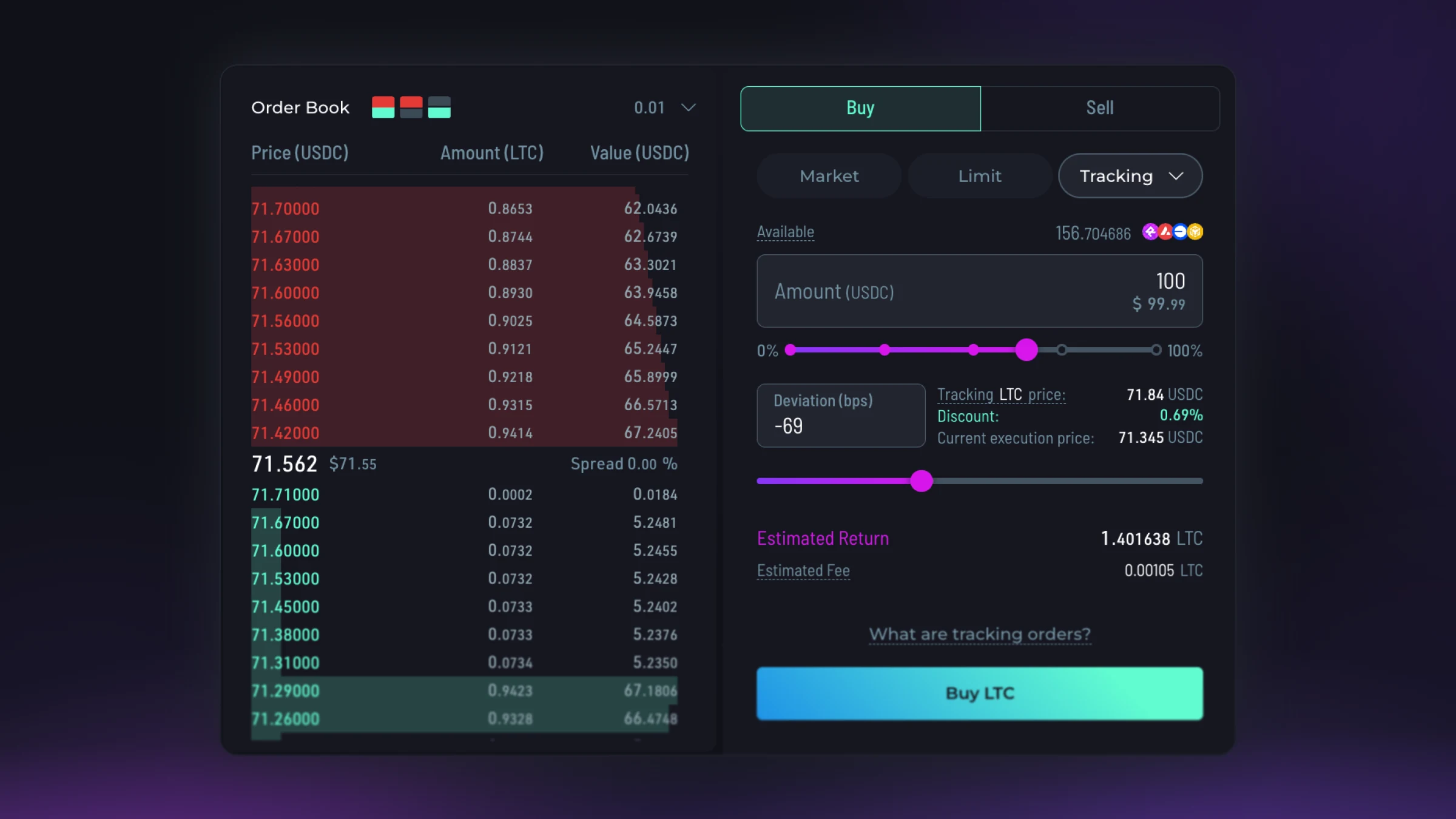
Tracking Orders
A tracking order follows an oracle price while maintaining a chosen discount or premium. Unlike a fixed limit order, its target moves with the reference market.
This creates room for more advanced trading and market-making strategies. Tracking Orders can also be used to bid on assets sold through Rujira's transparent liquidation process, allowing anyone to place an onchain bid at a selected discount rather than reserving the opportunity for insiders or specialist liquidation bots.
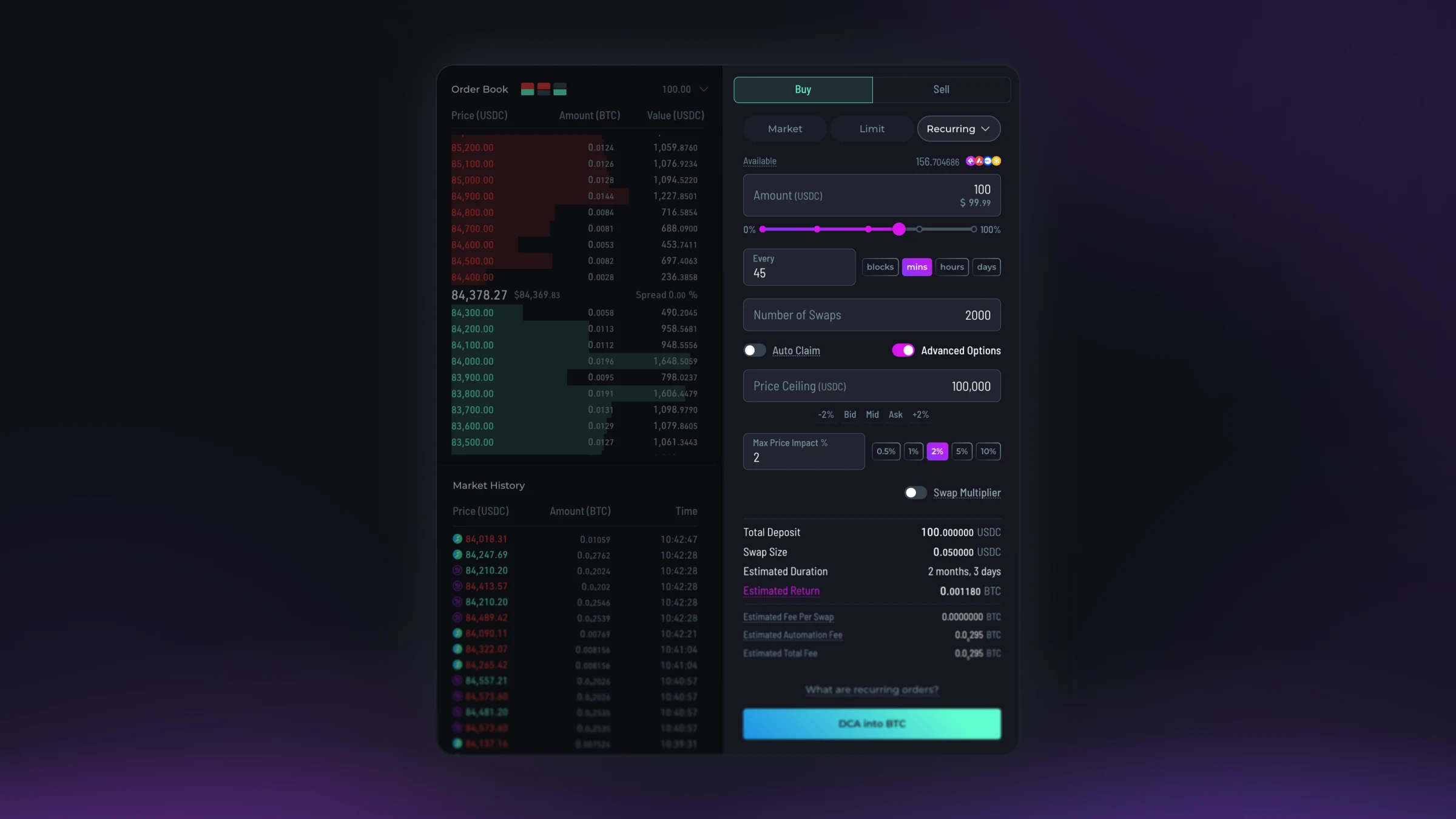
Recurring Orders
Recurring Orders let users schedule purchases or sales over time. They can be used to build a position gradually, reduce exposure in stages, or follow a consistent dollar-cost averaging strategy without returning to place every trade manually.
Users can choose how often the order runs and add optional protections such as a price floor, price ceiling, or maximum price impact. The strategy remains under the user's control and can be monitored, paused, edited, topped up, or withdrawn through Rujira Trade. The scheduled swaps execute transparently through smart contracts on Rujira and THORChain.
Automated Trading and Liquidity Strategies
Traders do not have to manage every order manually. Rujira's Automated Trading strategies can place and update liquidity on Rujira Trade according to rules selected by the user.
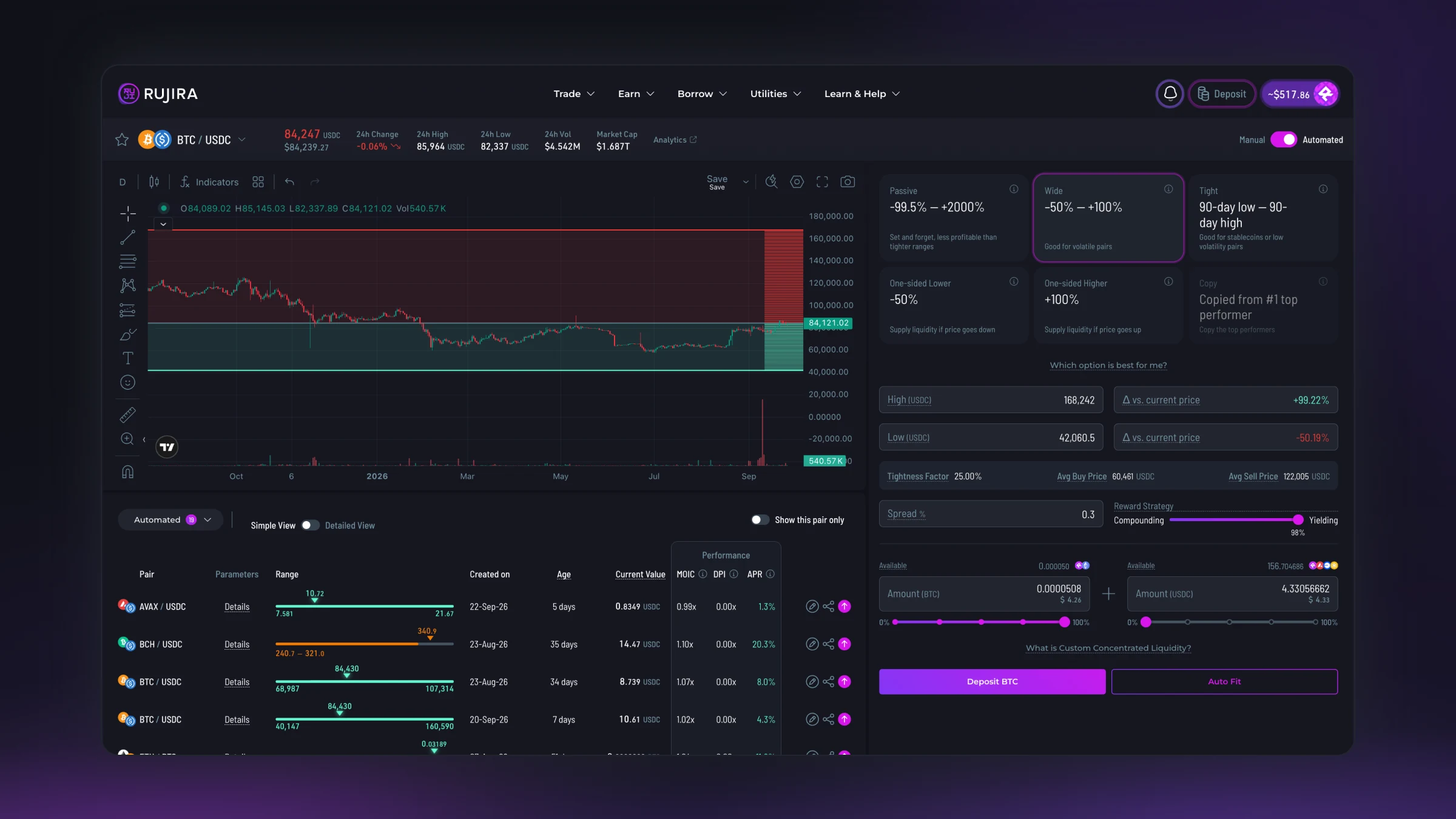
Custom Concentrated Liquidity, or CCL, lets liquidity providers choose a range and control how liquidity is distributed within it. By positioning more capital near the prices where trading is expected to happen, CCL can make liquidity more efficient and create greater depth without requiring the same amount of capital across every possible price.
The strategy trades through the same orderbook used by regular traders. When its orders fill, the position can continue managing inventory and placing new orders according to its settings. This connects Automated Trading directly to the trading activity and liquidity visible on Rujira Trade.
Dynamic Concentrated Liquidity, or DCL, is planned as a future strategy. It is designed to position liquidity more dynamically around the current oracle price. As Rujira adds new open-source strategies, the orderbook can evolve without changing the transparent market structure traders already use.
How to Start Trading on Rujira
Connect a supported wallet. Connect a Rujira-supported wallet that gives you access to the full Rujira experience.
Deposit an asset. Deposit a supported asset from a connected blockchain to your Rujira address.
Choose a market. Open Rujira Trade and select the pair you want to trade.
Select an order type. Choose Market, Limit, Scale, Tracking, or Recurring based on how you want the trade to execute.
Review and confirm. Check the amount, price settings, fees, and expected result before signing the transaction.
Manage your orders. Follow active orders and strategies through the Rujira interface, and claim completed non-market orders where required.
Set up your wallet and get started or learn how to deposit assets before opening Rujira Trade.
An Orderbook Built for Open and Fair Finance
Rujira Trade combines decentralized infrastructure, native assets, transparent order matching, multiple liquidity sources, and advanced order types in one trading experience. It offers more control than a basic token swap while avoiding the custody and closed execution systems of centralized exchanges.
From a simple Market Order to recurring purchases and automated liquidity strategies, Rujira Trade gives everyone access to transparent trading tools built for native assets.